
For many dog owners, the word “crate” brings up mixed emotions. Some see it as a safe haven, while others feel guilty, as though they’re confining their dog unfairly. The truth is, when done correctly, crate training is one of the most valuable tools you can use to set your pup up for success.
As a trainer in Raleigh, I’ve seen crate training transform chaotic households into calm, structured environments. Let’s break down what crate training really is, why it’s not a punishment, and how you can implement it the right way.
The Purpose of Crate Training
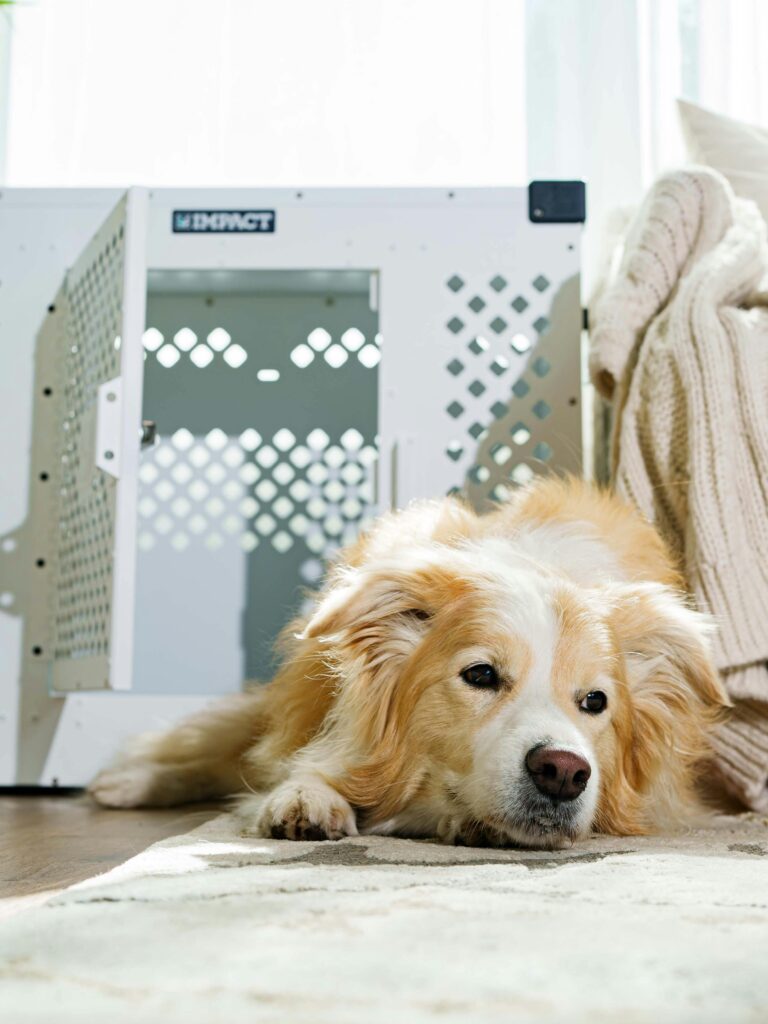
Crates are not cages meant to restrict. They are dens that provide comfort, boundaries, and security for dogs. In nature, canines seek out enclosed spaces for rest and protection. A properly introduced crate mimics that instinct.
Benefits include:
- Providing a safe space for your dog to relax
- Assisting with housebreaking and preventing accidents
- Reducing destructive behaviors when unsupervised
- Teaching independence and preventing separation anxiety
- Offering safety during travel or vet visits
Rather than being a tool of confinement, the crate becomes a tool of freedom because it builds structure and trust.
Why a Crate Is Not Punishment
Many owners mistakenly use the crate only when their dog misbehaves. This creates a negative association, making the crate feel like “time-out.” Instead, the crate should always be linked with positive experiences.
Think of it this way: a crate is not a jail cell, it’s a bedroom. Dogs need a personal, comfortable space that belongs to them, and the crate provides just that.
To ensure the crate is never seen as punishment:
- Never send your dog there as a consequence for bad behavior
- Introduce it with rewards, treats, and toys
- Keep the crate in a central, welcoming location in your home
- Encourage rest there during calm times, not just when you leave
How to Introduce Crate Training
- Start Slowly: Leave the crate open and let your dog explore it freely.
- Use Rewards: Place high-value treats or a favorite toy inside to create positive associations.
- Short Sessions: Begin with just a few minutes of crate time, gradually building duration.
- Pair With Commands: Teach a cue like “kennel” to help your dog understand what’s expected.
- Stay Consistent: Regular use at predictable times will make the crate part of your dog’s routine.
This approach builds trust and reduces any anxiety your dog may feel about being inside.
Crate Training for Puppies vs. Adult Dogs
- Puppies: Crates are especially helpful for housebreaking. Dogs don’t like to soil where they sleep, so crates encourage bladder control and consistent potty schedules.
- Adult Dogs: Crates can help manage anxiety, prevent destructive habits, and provide a structured retreat during busy household moments.
Even if your dog is older, it’s never too late to introduce crate training with patience and consistency.
Common Mistakes to Avoid
- Leaving your dog crated too long without breaks
- Using the crate only when leaving the house
- Failing to introduce it gradually
- Not making the crate comfortable with bedding or toys
- Associating it with punishment
Avoiding these mistakes ensures that the crate becomes a positive part of your dog’s life.
Linking Crate Training With Obedience
Crate training works best when combined with other obedience skills like place, sit, and down. For example, teaching your dog to calmly enter their crate on command reinforces both structure and respect. If your dog is protective of their crate or belongings, our post on fixing food aggression in dogs provides helpful insights on managing resource-based behaviors.
For families looking to take crate training further, our Basic Obedience Program integrates crate use with daily routines, building a reliable foundation of trust and calmness.
Crate Training and Alone Time
One of the biggest benefits of crate training is its role in preventing separation anxiety. By teaching your dog to enjoy quiet time alone, the crate becomes a comfort rather than a stress point. Pair it with enrichment like chew toys or stuffed Kongs to make crate time engaging.
The AKC provides excellent tips on crate training puppies, which also apply to adult dogs who are new to crates. Their advice can help you avoid common mistakes and ensure your dog builds a positive association with their crate.
Final Thoughts: Crates Equal Comfort
Crates are not a punishment. They are a gift to your dog, providing safety, structure, and peace of mind. With the right approach, your dog will see their crate as their own personal sanctuary, a place to retreat, relax, and recharge.
If you’re ready to integrate crate training into your obedience plan, our team at Off Leash K9 Training Raleigh can help. Contact us directly through our website to learn how we can support your training journey.